Restraints and Observances

Jai Shree KrsnaGuruji
As a seeker, you want to know the spiritual laws for conducting yourself while traversing this Spiritual journey. Shree KrsnaGuruji teaches the path of Bhakti and has given many discourses on how to live in this world and proceed on this path.
For your benefit, the following treatise has been prepared from many hours of live and recorded satsangs in which our Spiritual Master provided the answer to the question, “How should a spiritual seeker and aspirant behave in the world?”
Shree KrsnaGuruji has said that The Uddhava Gita is the most important spiritual text for today. It is the last message of Lord Shree Krsna while on this planet. It is greater than any other teachings the Lord has given.
And to whom has the Lord given this Gita to?
By His grace and out of concern for His devotee, Lord Shree Krsna has given the following lessons to Uddhava, an accomplished Spiritual being. Thus today, through our beloved Shree KrsnaGuruji these teachings are given to you.
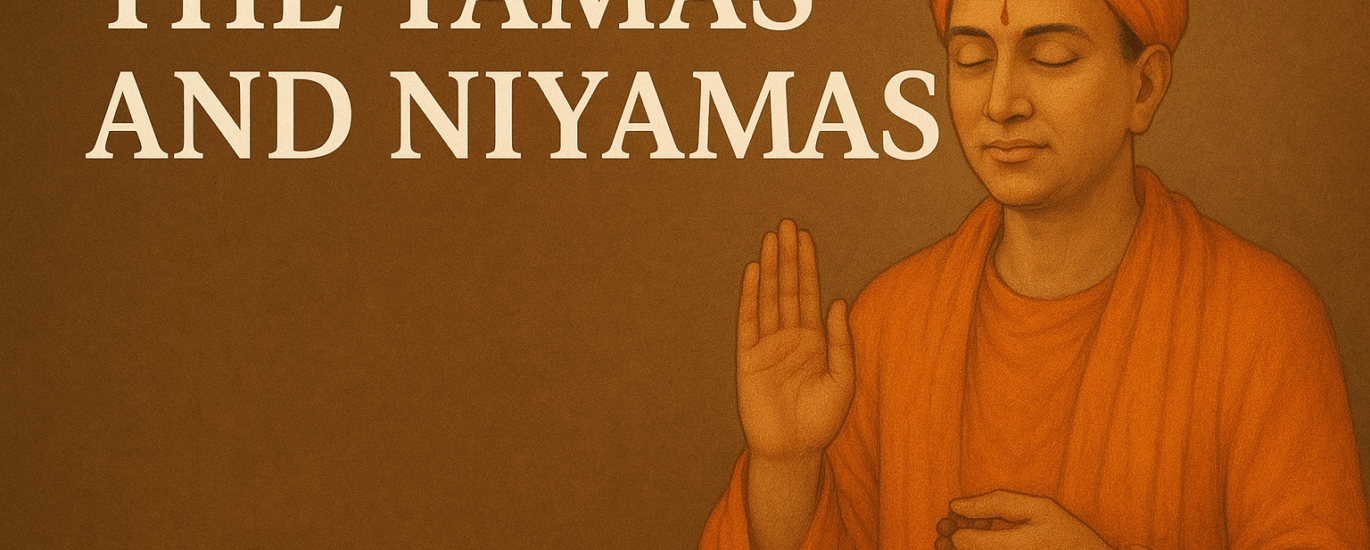
Within this very important chapter, Chapter 14 – The Practice of Devotion, you will find the teachings which encompass the restraints and observances for those on the spiritual path. These are called the Yamas and the Niyamas.
These lessons will tell you how to be in the world and yet stay on track for your spiritual growth.
Shree KrsnaGuruji’s original exposition on The Uddhava Gita were recorded and exist as part of the KrsnaKnows YouTube channel. You can find them under the Uddhava Gita playlist.
The Verses: The Yamas and Niyamas
Chapter 14, Verse 28
Uddhava said:
Of how many kinds is Yama, O Chastiser of foes, and Niyama also? …
The Lord said:
Verse 33
Non-injury, truthfulness, non-stealing, non-attachment, shame, non-accumulation of wealth, faith in God, chastity, silence, patience, forgiveness, fearlessness.
Verse 34
Purity of mind and of body*, repetition of the Lord’s name, austerity, offering of oblations in the sacred fire, faith in one’s self, hospitality, worship of Me, visiting of holy places, working for the good of others, contentment, and service unto the teacher.
Verse 35
These groups of twelve virtues enumerated (in the above two verses) constitute the Yamas and the Niyamas. These, my friend, if rightly practised by men, surely produce results¹ according to their desires. (*counted as two)
This concludes the Introduction, please continue onward to The Yamas.
Be Sure to check out the The Ten Lessons of The Master